2026-10-14 · Bench notes
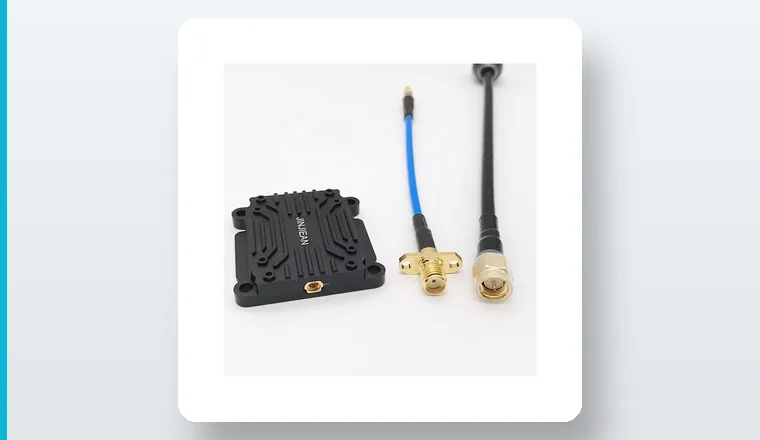
Why a 2.5 W VTX measures 1.9 W on your meter
Almost every power complaint we receive turns out to be a measurement problem rather than
a transmitter problem. Three things move the number more than the amplifier does.
1. The meter is calibrated at the wrong frequency. A power meter specified to ±0.5 dB at
2.4 GHz is often ±1.5 dB at 5.8 GHz. That alone is a 40 % swing.
2. The load is not 50 Ω. A cheap dummy load with 1.6:1 VSWR reflects about 5 % of the
power, and the meter reads forward power only on good units.
3. The supply sags. Most 2.5 W modules draw 1.6–1.9 A at full power. A 500 mA BEC, or a
long 28 AWG pigtail, drops the rail and the PA backs off.
Our batch report lists the measurement conditions — supply voltage, load VSWR, meter model and
cable loss — next to the figure. If your reading differs by more than 0.7 dB from ours, send the
setup and we will reproduce it.
2026-09-22 · Design
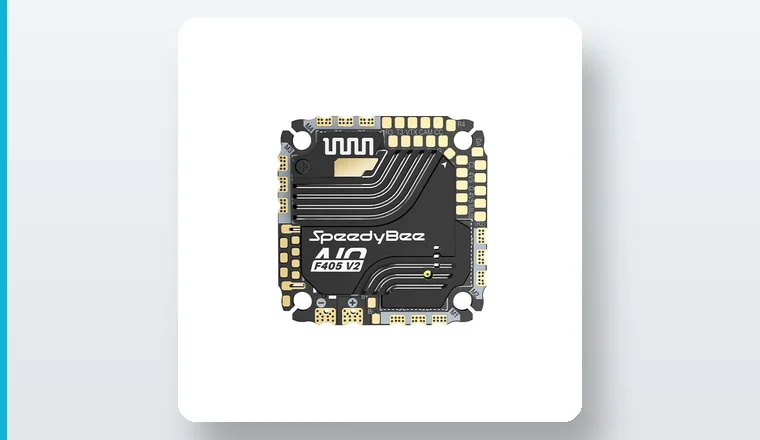
The gyro filter is doing more for your quad than the PID tune
Flight controllers get compared on MCU model and gyro part number. In practice the difference
between a good and a mediocre stack shows up below 120 Hz, where frame resonance lives.
On the stacks we ship we moved the gyro to a soft mount with a defined durometer, added a
dedicated LDO for the 3.3 V rail and keep the SPI traces under 12 mm. The result is a cleaner
spectrum before any digital filter is applied — which means you can run lower filter cutoffs
without adding latency.
If you are debugging propwash, log the gyro at 2 kHz before touching the PIDs. Nine times out of
ten the answer is in the spectrum, not in the tune.
2026-08-30 · Supply chain
What a PCN should contain, and what ours does
Component shortages taught buyers to ask for a product change notification. Not every
supplier sends one, and the ones that do rarely include enough to assess risk.
A usable PCN states: the affected part numbers and date codes, the old and new component with
manufacturer and tolerance class, the reason for the change, the qualification test performed,
and the last shipment of the old build. Anything less is a notification, not a change control.
Ours goes out before the first affected batch ships, with a two-week window to accept or hold
the previous BOM. For OEM customers it is written into the supply agreement.
2026-07-18 · Applications
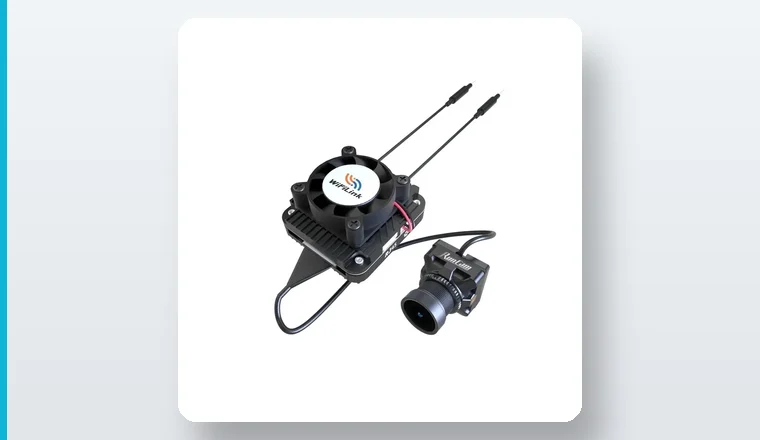
Thermal cores on an FPV airframe: three lessons from field trials
We spent four months flying 640 × 512 cores on 5-inch airframes with inspection crews.
Three findings changed the way we specify thermal packages.
Mounting matters more than resolution. A rigid mount with a foam isolator cut image smear
more than a jump from 384 to 640 pixels.
Radiometric data needs a reference. Without a shutter or a known-temperature reference,
absolute readings drift with ambient. We ship a shutter flag and log NUC events.
Power is the constraint. A core plus a 5.8G link plus a gimbal pulls 6–8 W. Plan the pack
around the thermal duty cycle, not the hover time.
